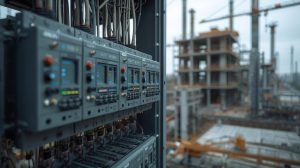


Walk into a modern factory today and the difference is clear. Machines no longer operate in isolation. Sensors collect real-time data, systems share information across networks, and dashboards provide instant visibility into production. This connected environment is the foundation of the Industrial Internet of Things (IIoT) and Industry 4.0, and it is reshaping how industrial operations run.
This shift brings major gains in efficiency, automation, and insight. At the same time, it introduces new security risks that many organizations are not prepared to manage.
As industrial environments become more connected, they also become more exposed.
For decades, operational technology (OT) networks were isolated by design. Security depended largely on physical separation. Industry 4.0 changes that model. Connectivity is now essential, and with it comes a level of cyber risk that industrial environments have never faced before.
This is the side of digital transformation that often goes unnoticed until an incident forces it into focus.
Why Industry 4.0 Is Both Powerful and Risky
Industry 4.0 works by turning physical processes into digital ones. IIoT devices collect data from machines, analytics platforms process that data, and automated systems act on it in near real time. Leaders gain remote visibility, maintenance becomes predictive, and operations respond faster to change.
These benefits depend on constant connectivity.
Each and every interrelated device, platform, and interface increases the number of potential access points to the environment. The traditional OT systems were built to provide reliability and long service life, but not cybersecurity. Most of them have been operating for decades long with little to no improvements. Once these systems are integrated with modern IT networks and cloud solutions, the stability and security level is altered.
Where data flows freely, threats can follow.
5 Security Risks Hidden in Industry 4.0 Environments
- Rapid Growth of Connected but Insecure Devices
The industrial surroundings are now dependent on significant proportions of IIoTs such as sensors, meters, cameras, gateways, and intelligent controllers. Most of these gadgets have not been developed with robust security measures. Some of the weaknesses include weak default credentials, out-of-date firmware, and unencrypted communication.
Organizations in most instances are not fully inventory of that which is attached to their networks. The devices that were installed many years ago might not have been shut off. Others may be added as an ad hoc or informal effort by teams to gain operational insight and may not receive any security review.
One device that is not patrolled can give the attackers a presence in the plant.
- IT, OT, and Cloud Integration Creates New Exposure
Industry 4.0 depends on close integration between OT systems, enterprise IT networks, and cloud services. This integration enables remote monitoring, centralized analytics, and advanced use cases such as digital twins.
It also connects environments with very different security assumptions.
OT systems prioritize availability and safety. IT systems are built to handle constant cyber threats such as phishing, malware, and ransomware. When these environments are connected, threats can move between them.
An incident that begins with a compromised laptop, email account, or cloud service can now reach industrial systems. Attacks that once required physical access to a facility can start with a single malicious link.
- Legacy OT Systems Exposed to Modern Threats
Legacy PLCs, controllers, and software platforms continue to be utilized in many industrial processes, designed many years prior to cybersecurity becoming an issue. These systems are usually not patchable, upgradable or securable through the contemporary means. Others depend on other non-mainstream operating systems.
In the case legacy systems are linked to IIoT devices or cloud environments, they are left vulnerable without any significant protection. These systems are attacked by the attackers since their activity can be predicted, and they have limited defenses.
These systems once compromised are in direct control of the physical processes, so that the effects of an attack may be more severe.
- Supply Chain and Third-Party Access Risks
Industrial environments now depend on a wide range of vendors, service providers, and contractors. Equipment manufacturers, remote support tools, maintenance teams, and cloud platforms all require some level of access.
This creates an extended trust network.
Attackers often target third parties because they can provide indirect access to the primary environment. A compromised vendor system or contractor device can become an entry point into industrial operations.
As Industry 4.0 expands operational capability, it also expands the number of trusted connections that must be secured.
- Limited Visibility into Industrial Data Flows
Industry 4.0 generates constant data exchange between devices, controllers, applications, and platforms. Many organizations struggle to maintain visibility into these communications.
Without clear insight, it becomes difficult to know:
- Which devices are communicating
- Which systems have access to critical assets
- Whether traffic is encrypted
- Whether unauthorized connections exist
These blind spots allow attackers to move unnoticed. Data is the foundation of Industry 4.0, but without proper visibility and control, it becomes a liability.
When Cyber Risk Becomes Operational Risk
Industrial cyber incidents do not just disrupt data. They have impact on physical operations.
Security intrusion can close manufacturing facilities, disrupt energy supply or disrupt water and transport networks. Doctored sensor data may result in unsafe conditions, wrong chemical reactions or damage of equipment. It is not just impact on a financial loss.
With critical industries, downtime may impact on the public safety and critical services. IT systems are no longer the only property affected by cyber threats. They have become operational risk per se.
Building Security into Industry 4.0 from the Start
Innovation should not be slowed down as the answer. It is to secure it.
An effective Industry 4.0 plan will comprise complete visibility of industrial resources, obvious distinction between IT, OT, and IIoT networks, and tight control of remote access. Old systems need to pay trade-offs to compensate security controls in cases where they cannot be patched.
Detection of threats should not be a reactionary process. Small problems can be prevented by timely detection of suspicious behavior and turning it into a big problem. Equally significant, both IT and OT teams should collaborate and assume joint responsibility and common awareness of risk.
Industry 4.0 needs discipline more than it needs technology.
Conclusion: Secure Connectivity Is the Real Enabler of Progress
Industry 4.0 works since all is interconnected. It is the same connectivity, which dictates innovation as a source of long-term value or long-term risk.
The biggest risk is not embracing new technology. It is embracing it without knowing how exposure is evolving as systems become more open, more digital, and more interconnected.
It is only organizations that perceive security as a fundamental aspect of industrial transformation, and not something to be implemented later, that will continue to make progress. Efficiency leads to improvement, but security will ensure that improvement is long-term.
Ready to strengthen the security of your Industry 4.0 environment?
Visit our website to learn how we help organizations protect IIoT, OT, and modern industrial ecosystems with visibility, control, and confidence.
Industrial Internet of Things (IIoT) is the term that is applied to describe the network of connected devices, sensors, machines, and software which are utilized in industrial settings to gather and share data. Industry 4.0 can be automated, monitored in real-time, and predictively maintained along with data-driven decision-making with the help of IIoT.
Industry 4.0 will bridge the gap between OT systems of the past and the current IT and cloud systems. With every added connection, the attack surface is expanded and the threats can move across environments with ease.
Most IIoT devices have weak default passwords, out-of-date software, and weak encryption. They may be easy points of entry to attackers when implemented on a large scale without proper supervision.
OT and IIoT attacks may negatively affect production, damage equipment, cause unsafe working conditions, or discontinue such essential services as energy and transportation.
Yes. The legacy systems do not necessarily come with security controls and may not be easily upgraded. When they are connected to the modern networks they are exposed and hard to protect without extra protection.
Related Articles